| The Aircraft |
| Tasmania boasts some of Australia's most rugged and unforgiving terrain. If you walked around the coastline of Tasmania, including all the inlets and bays, you would walk around the longest coast of any Australian State. The Service averages around 150 missions each year. |
|
These missions have involved;
- Searches for missing bushwalkers, boats and planes;
- Air lifting injured and ill bushwalkers and people living in remote areas and even off boats which are miles off shore;
- 'Medivac' or the medical evacuation of people injured in road accidents and accidents in remote areas;
- Diving or other water-rescue related accidents.
In the case of many rescues, it is impossible to land and the casualty is winched into the helicopter and treated by the paramedics whilst being transferred to the nearest hospital.
|
 |
|
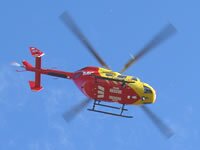
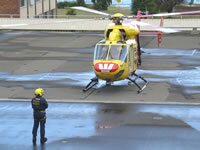
The Westpac Rescue Helicopter is a twin-engine Kawasaki BK117 which operates 24-hours a day, seven days a week and is equipped with medical and emergency equipment enabling it to fly into almost any area in any conditions, day or night.
|
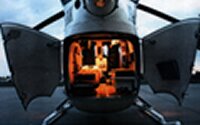
| The helicopter has a three-person winch stretching 70m in length and contains a stretcher. The helicopter is also capable of two-patient transport when required. It also contains intensive care medical equipment and a range of rescue equipment. It also has a 30 million candle power 'Nitesun' searchlight for night operations. |
 |
| The Search and Rescue capabilities of Tasmania Police have been extended through the generous provision by the Australian Maritime Safety Authority of a Forward Looking Infra-Red (FLIR) system, purchased at a cost of $US400,000, fitted to the Westpac Rescue Helicopter. The system enhances search and rescue through a range of cameras incorporating the latest technology in thermal imaging. |